




- Konu Yazar
- #1
Pepperl+Fuchs’un LoRaWAN sensör node'una, kablosuz sensörlerin yanı sıra iki volt-free kontakt bağlanabiliyor. Bu sayede, mevcut kontrol sistemlerinde uzun menzilli veri iletimi güçleniyor.
Pepperl+Fuchs, WILSEN.node sensörüne volt-free kontak bağlantı imkanı ekledi. Bu özellik, mevcut cihazlara Endüstriyel Nesnelerin İnterneti (IIoT) fonksiyonu kazandırarak modern veri toplama ve proses kontrolüne uyarlama avantajı sunuyor. Güncellemeyle birlikte, anahtar ve röle gibi izolasyonlu, volt-free kontakların bağlanması mümkün hale geldi; bu da sistem esnekliğini artırırken elektriksel gürültüyü azaltır ve güvenliği güçlendirir.
WILSEN.node ile volt-free kontak entegrasyonu
WILSEN.node, Pepperl+Fuchs’un LoRaWAN tabanlı kablosuz sensör çözümüdür. Artık bu sensörlerle volt-free kontaklar kullanılarak, sistemlerin esnekliği ve güvenliği artmaktadır.
Volt-free kontak nedir?
Volt-free (potansiyelsiz) kontaklar, enerji almadan control edilen cihazlar arasındaki bağlantıyı sağlar. Bu kontaklar, elektriksel izolasyon ile kontrollü süreçleri yönetir; örneğin, röle veya anahtarlar. Röle, sıvı seviyesini kontrol eden pompa gibi cihazlarla bağlantı kurabilir ve böylece diğer elektronik bileşenlerden izole olur.
Bu izolasyon, güvenliği artırır, donanımı korur ve elektromanyetik girişimi azaltır. Örneğin, anahtarların verdiği impuls sinyalleri sensörlerde hatalara neden olabilir. WILSEN.node ile bu riskler minimizedir.
Daha fazla bilgi için: İnceleme ve teknik detaylar
t on motors can also cause EMI that can bleed into instrumentation signals.
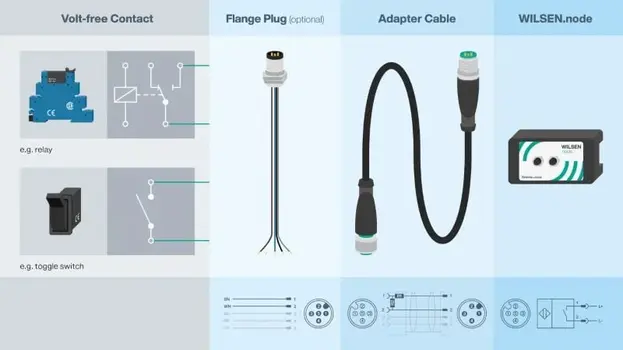
Volt-free contacts, such as relays and toggle switches, can be connected to the WILSEN.node with the use of an adapter cable
Volt-free contacts, such as relays and toggle switches, can be connected to the WILSEN.node with the use of an adapter cable. Image used courtesy of Pepperl+Fuchs
Volt-free contacts, such as relays and toggle switches, can be connected to the WILSEN.node with the use of an adapter cable. Image used courtesy of Pepperl+Fuchs
LoRaWAN WILSEN.node Upgraded
Pepperl+Fuchs’ WILSEN.node LoRaWAN-based wireless sensor node already allows systems engineers to interface inductive and capacitive sensors, such as level sensors, leak detection connections, rotational speed output from motors, flow sensors, and other such devices. Sensors are connected wirelessly via LoRaWAN. By adding volt-free connections, users can save on wiring and headaches for retrofitting machines safely.
Volt-free contacts can be connected to the WILSEN.node via a resistor network and adaptor cable. This allows switches and relays to be up to 10 m away from the WILSEN.node. The cable can also be routed through the housing for a clean, compact installation.
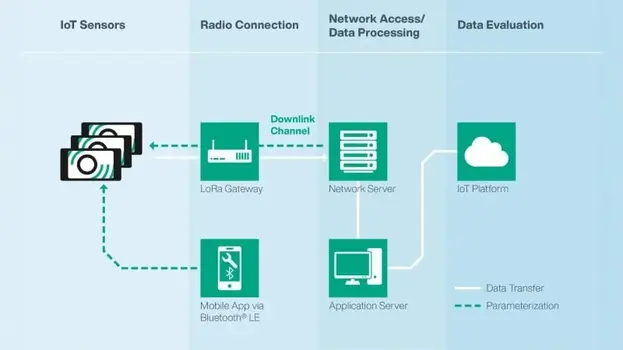
The WILSEN.node utilizes a LoRaWAN network to enable signal transmission over long distances, bringing IoT capabilities to existing systems
The WILSEN.node utilizes a LoRaWAN network to enable signal transmission over long distances, bringing IoT capabilities to existing systems. Image used courtesy of Pepperl+Fuchs
The WILSEN.node utilizes a LoRaWAN network to enable signal transmission over long distances, bringing IoT capabilities to existing systems. Image used courtesy of Pepperl+Fuchs
Retrofitting Control Systems
While many control systems benefit from the additional flexibility provided by
volt-free contacts, Pepperl+Fuchs explicitly highlights several industrial examples. The WILSEN.node is already designed for retrofitting applications, and the new connections make it a good fit for machine monitoring, such as for tallying operation hours.
In terms of specific industries, Pepperl+Fuchs envisions this equipment being used extensively in the chemical process industries. They suggest integrating the newest WILSEN.node with pumps, level controllers, and leak detection sensors. It can also monitor HVAC controls, such as moving dampers and shutters, blower motor controls, vent position, and other hardware. Also, dock monitoring and control, like closing and locking bay doors, detecting trucks, and other such tasks, can be integrated with the updated WILSEN.node.
Pepperl+Fuchs, WILSEN.node sensörüne volt-free kontak bağlantı imkanı ekledi. Bu özellik, mevcut cihazlara Endüstriyel Nesnelerin İnterneti (IIoT) fonksiyonu kazandırarak modern veri toplama ve proses kontrolüne uyarlama avantajı sunuyor. Güncellemeyle birlikte, anahtar ve röle gibi izolasyonlu, volt-free kontakların bağlanması mümkün hale geldi; bu da sistem esnekliğini artırırken elektriksel gürültüyü azaltır ve güvenliği güçlendirir.
WILSEN.node ile volt-free kontak entegrasyonu
WILSEN.node, Pepperl+Fuchs’un LoRaWAN tabanlı kablosuz sensör çözümüdür. Artık bu sensörlerle volt-free kontaklar kullanılarak, sistemlerin esnekliği ve güvenliği artmaktadır.
Volt-free kontak nedir?
Volt-free (potansiyelsiz) kontaklar, enerji almadan control edilen cihazlar arasındaki bağlantıyı sağlar. Bu kontaklar, elektriksel izolasyon ile kontrollü süreçleri yönetir; örneğin, röle veya anahtarlar. Röle, sıvı seviyesini kontrol eden pompa gibi cihazlarla bağlantı kurabilir ve böylece diğer elektronik bileşenlerden izole olur.
Bu izolasyon, güvenliği artırır, donanımı korur ve elektromanyetik girişimi azaltır. Örneğin, anahtarların verdiği impuls sinyalleri sensörlerde hatalara neden olabilir. WILSEN.node ile bu riskler minimizedir.
Daha fazla bilgi için: İnceleme ve teknik detaylar
t on motors can also cause EMI that can bleed into instrumentation signals.
Volt-free contacts, such as relays and toggle switches, can be connected to the WILSEN.node with the use of an adapter cable
Volt-free contacts, such as relays and toggle switches, can be connected to the WILSEN.node with the use of an adapter cable. Image used courtesy of Pepperl+Fuchs
Volt-free contacts, such as relays and toggle switches, can be connected to the WILSEN.node with the use of an adapter cable. Image used courtesy of Pepperl+Fuchs
LoRaWAN WILSEN.node Upgraded
Pepperl+Fuchs’ WILSEN.node LoRaWAN-based wireless sensor node already allows systems engineers to interface inductive and capacitive sensors, such as level sensors, leak detection connections, rotational speed output from motors, flow sensors, and other such devices. Sensors are connected wirelessly via LoRaWAN. By adding volt-free connections, users can save on wiring and headaches for retrofitting machines safely.
Volt-free contacts can be connected to the WILSEN.node via a resistor network and adaptor cable. This allows switches and relays to be up to 10 m away from the WILSEN.node. The cable can also be routed through the housing for a clean, compact installation.
The WILSEN.node utilizes a LoRaWAN network to enable signal transmission over long distances, bringing IoT capabilities to existing systems
The WILSEN.node utilizes a LoRaWAN network to enable signal transmission over long distances, bringing IoT capabilities to existing systems. Image used courtesy of Pepperl+Fuchs
The WILSEN.node utilizes a LoRaWAN network to enable signal transmission over long distances, bringing IoT capabilities to existing systems. Image used courtesy of Pepperl+Fuchs
Retrofitting Control Systems
While many control systems benefit from the additional flexibility provided by
volt-free contacts, Pepperl+Fuchs explicitly highlights several industrial examples. The WILSEN.node is already designed for retrofitting applications, and the new connections make it a good fit for machine monitoring, such as for tallying operation hours.
In terms of specific industries, Pepperl+Fuchs envisions this equipment being used extensively in the chemical process industries. They suggest integrating the newest WILSEN.node with pumps, level controllers, and leak detection sensors. It can also monitor HVAC controls, such as moving dampers and shutters, blower motor controls, vent position, and other hardware. Also, dock monitoring and control, like closing and locking bay doors, detecting trucks, and other such tasks, can be integrated with the updated WILSEN.node.